Why Construction Costs Are High —And Why They’re Not Coming Down
Understanding the real forces behind today’s market, and what it means for your home.
Construction Market Trends Remodeling
Every week, someone sits across from me or calls our office and asks some version of the same question: “Why does everything cost so much more than I expected?” It’s a fair question — and it deserves a straight answer, not a shrug or a vague reference to inflation.
After nearly 25 years in residential construction, I’ve watched this industry change in ways most people outside of it don’t fully see. The cost increases you’re experiencing aren’t arbitrary. They have roots — deep ones — and understanding them will help you make better decisions about your home.
The labor problem is the real story
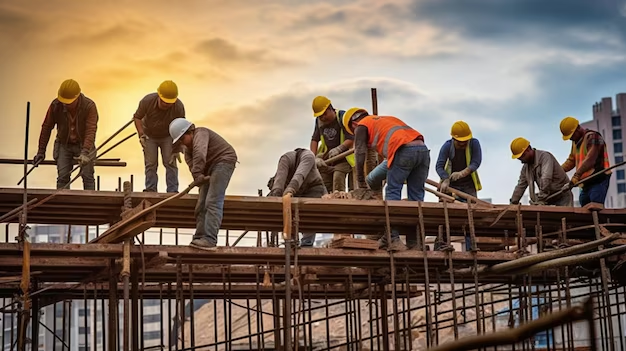
When people hear “construction costs are up,” they often assume materials are the culprit. And yes, material prices have climbed.
But the more honest answer — the one that doesn’t get talked about enough — is that labor is the real driver, and it’s not a temporary condition.
The skilled trades workforce has been shrinking for years. A generation of experienced craftspeople is aging out of the industry, and not enough people are coming up behind them. Many workers who left larger companies during and after the pandemic started their own small businesses.
That sounds like a good thing — more competition, more availability. But the reality is more complicated. Running a construction business requires proficiency in two very different skill sets: the craft itself and the business behind it — estimating, scheduling, communication, contracts, and financial management.
Many of these new small operators are skilled in one but not yet in both, which creates inconsistency in quality and reliability for homeowners and general contractors alike.
“The cost increases you’re experiencing aren’t arbitrary. They have roots — and understanding them helps you make better decisions about your home.”
Meanwhile, the contractors and subcontractors who have built strong, capable companies are working hard to keep their best people. That means paying competitive wages, offering benefits, and building workplace cultures that retain talent.
Those investments are real costs — and they show up in every proposal you receive. A subcontractor paying their crew well, with proper insurance and structured schedules, will cost more than one who isn’t.
But they’re also the ones who show up on time, do the work right, and are still around if something needs to be addressed six months later.
Fewer manhours, tighter schedules
There’s another workforce shift happening that rarely makes headlines: today’s skilled workers, many of them, prefer working 40 hours per week or fewer. That’s a legitimate lifestyle choice — but for the construction industry, it means the total available manhours in any given market has contracted significantly. We’re not just short on bodies; we’re short on hours.
Combine that with the reality that the best subcontractors are booked out for weeks or months, and you get something that didn’t used to be a problem: scheduling is now one of the most complex parts of running a construction project.
Coordinating a project that used to involve relatively flexible subcontractors now requires precise advance planning, with real consequences when one trade runs long or becomes unavailable. That complexity doesn’t just test project management skills — it has real cost implications throughout a job.
We’re also competing for workers we’ll never see
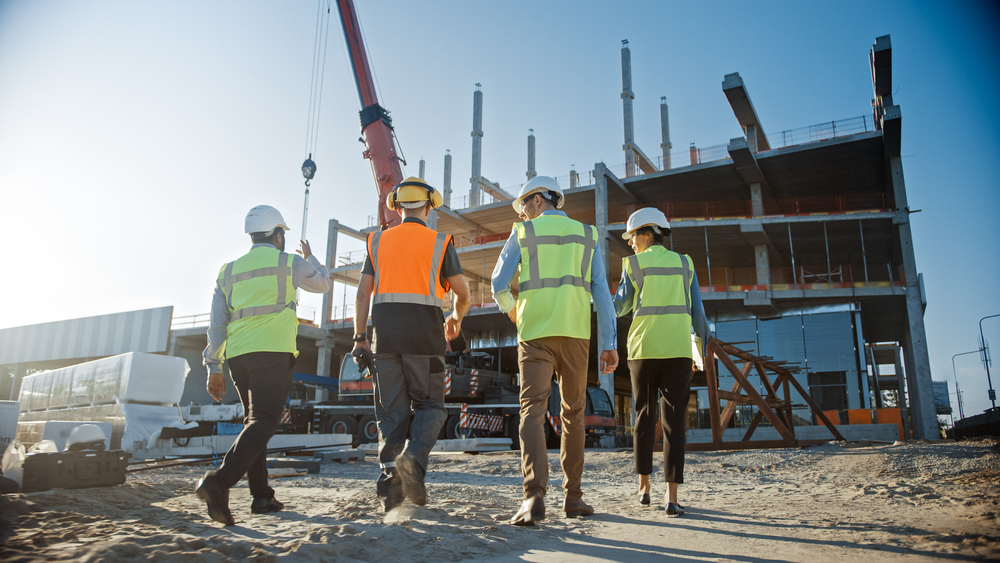
Here in mid-Michigan, we face a competitive pressure that’s easy to overlook: commercial & industrial construction and large corporate projects are constantly pulling labor away from the residential market.
Big industrial facilities, commercial builds, and institutional projects can offer union wages, long-term job security, and full benefit packages that are difficult for residential contractors to match dollar-for-dollar.
We lose skilled workers — both in the field and in the office — to these projects regularly. It’s not a complaint; it’s just the market we operate in. But it absolutely affects availability and cost.
Supply chains are leaner than they look
The material supply chain issues that made headlines a few years ago have largely stabilized — but what’s less visible is that the network of suppliers, distributors, and manufacturers is permanently smaller than it was. Some companies didn’t survive the disruption. Others consolidated.
The result is a supply ecosystem with less redundancy and less flexibility, which means lead times are longer and pricing is less competitive than it once was. It’s not always dramatic, but it’s a steady upward pressure that compounds over the course of a project.
This is not a bubble
I want to be clear about something, because I hear this speculation often: what we’re experiencing is not a construction cost bubble that will eventually pop and bring prices back down. Bubbles exist in markets driven by speculation — where prices are disconnected from underlying value and correction is inevitable. That’s not what’s happening here.
Labor costs reflect real wages for real people with real skills. Those wages don’t go down when economic conditions soften. Skilled trades workers don’t accept pay cuts because lumber prices dipped. The structural workforce shortage in our industry is not going away in any foreseeable timeframe — if anything, it will deepen as the baby boom generation of tradespeople fully retires over the next decade.
“Skilled trades workers don’t accept pay cuts because lumber prices dipped. This is not a bubble — it’s a new baseline.”
What we’re experiencing is a new baseline. Anyone waiting for 2015 prices to return is going to be waiting a very long time — and watching their project get more expensive in the meantime.
New lots are getting further out — which matters more than you think
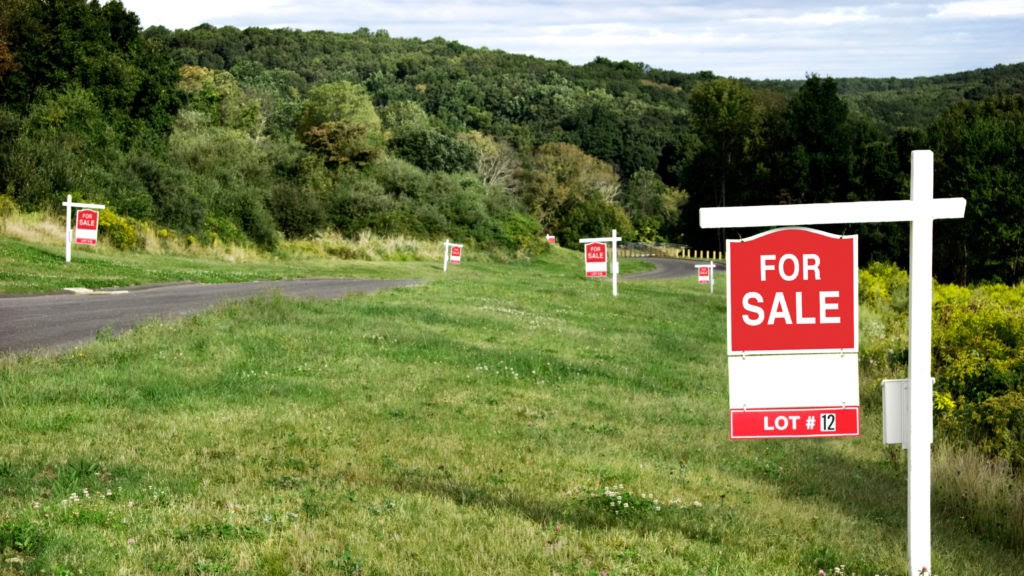
There’s a geographic dimension to all of this that directly affects the new construction market. The available buildable land close to established neighborhoods and infrastructure is increasingly spoken for. New lots are pushing further from town — further from schools, amenities, and the community character that attracts buyers willing to invest significantly in a home.
For clients considering a high-end custom build, a lot 20 minutes from town is a fundamentally different proposition than one in an established neighborhood. This dynamic is quietly cooling the new construction market for the top tier of the market, while pushing demand toward remodeling.
Remodeling demand will stay strong — and so will its costs
All of these forces converge on the remodeling market in a straightforward way: demand is high, supply of quality contractors is limited, and basic economics drives costs upward. Homeowners who love their location but want more space, better function, or a home that reflects how they actually live today have one realistic path — invest in what they have.
Here in the Midwest specifically, we’ve historically faced higher per-trade costs relative to other regions due to our labor shortage compared to more densely populated markets. That’s unlikely to change. What it means for homeowners is that partnering with an experienced, financially stable builder who can manage subcontractors effectively, schedule tightly, and deliver consistent quality is more valuable than ever.
A low bid in this environment is rarely what it appears to be.
What you should take away from all of this
The clients we work best with are the ones who understand this landscape going in. They know that a quality project delivered on time and on budget reflects real skill and real relationships — with subcontractors, suppliers, and the tradespeople who show up every day. They choose their builder based on trust and track record, not just the number on a page.
If you’re thinking about a remodel, an addition, or a custom home, the best time to start the conversation is before you’re ready to start the project. Scheduling windows fill fast, and having a builder who knows your goals early means the process works for you instead of against you.
We’re always happy to talk through what a project might realistically look like — timeline, budget, and all of it. That conversation is always free, and it’s always honest.

In 2021, Jason became the youngest State President of Michigan’s HBA. He has served on his local HBA Board of Directors for over 13 years, including two years as president, and is active with the National Association of Home Builders (NAHB).
Jason is also dedicated to workforce development, mentoring the next generation to pursue careers in the trades. He serves on local building trades committees to contribute to his community.
- Why Construction Costs are High - May 12, 2026
- Our Team - April 24, 2026